Hope is not naivety -- it's choosing to act as if change is possible before you feel certain, because the alternative (predicting the future only from your worst days) is a self-fulfilling prediction of collapse. Today you write both the nightmare and the dream, on purpose spending twice as long on the dream, because the nightmare is easy to picture and the dream requires real work.
Tap to view full size
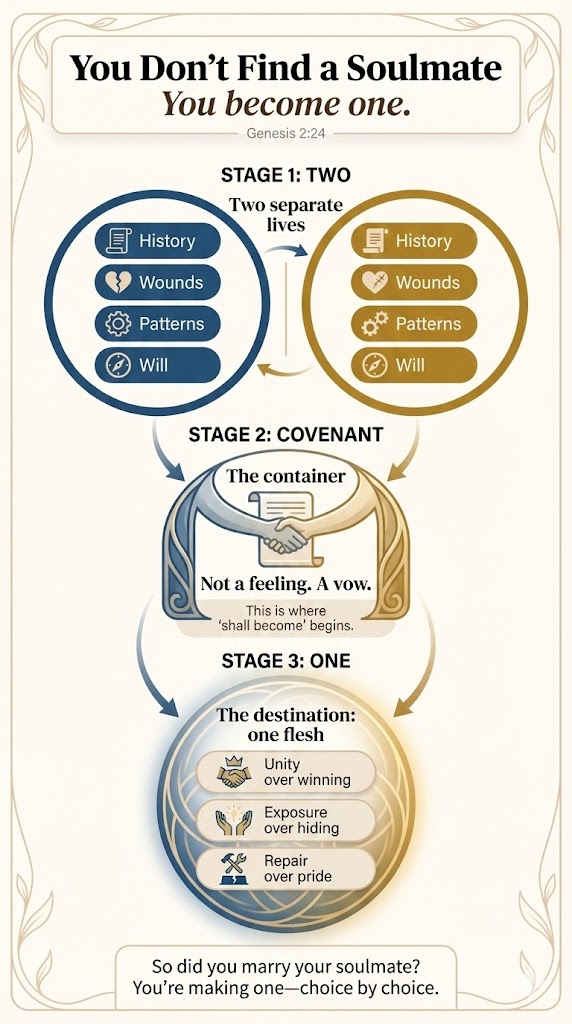
This is the same choosing-before-certainty this day is built around, in a different shape: you don't discover you married your soulmate, you build that reality one choice at a time -- unity over winning, exposure over hiding, repair over pride. That's the same posture your dream-vision activity asks you to hold today.
The Hope Audit
Rate your hope on a scale of 1-10. If below 5, identify the evidence you are using. Are you ignoring evidence of change? Act as if change is possible today, even if you do not feel it yet.
Your response here isn't saved yet -- that lands with activity persistence, a later step.
The Nightmare and the Dream
Part 1 (10 minutes): Where are you in 5 years if nothing changes? Write it. Feel the weight. Part 2 (20 minutes): Describe a specific Tuesday afternoon five years from now where it worked. How do you greet each other? How does the air in your home feel? Spend twice as long on the dream as the nightmare.
Your response here isn't saved yet -- that lands with activity persistence, a later step.
Reflect with your coach
Did you actually spend twice as long on the dream as the nightmare -- with real, specific detail, not just a shorter mirror of the bad version?
Hope, biblically, is not wishful thinking -- it's confidence that acts before certainty arrives. Today's dream exercise is an act of faith, not fantasy.
Day 20 of 28