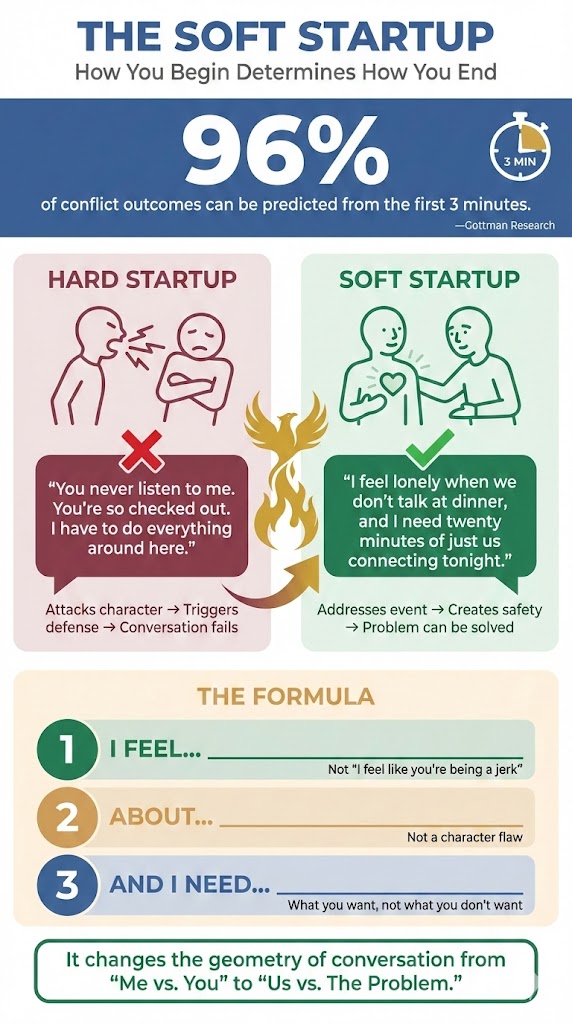
Anger is the bodyguard -- it shows up to protect a softer, truer feeling underneath (fear, loneliness, feeling unimportant), and leading with the bodyguard guarantees your partner gets defensive instead of actually hearing you. This is the same mechanism Gottman's research names as the antidote to Criticism: state the feeling, name the specific behavior, make a positive request -- not the accusation.
Tap to view full size
96% of conflict outcomes are predictable from the first three minutes -- which is exactly why this page's own activities ask you to catch the softer emotion before you speak, not after. The formula here is the same shape as this day's own hard/soft contrast ("You are always on your phone" vs. "I feel lonely..."); use its three blanks directly the next time you feel the bodyguard show up.
Emotion Archaeology
Think of the last time you felt that hot surge of anger in a conflict. Ask the bodyguard to step aside. Were you actually furious about the dishes, or terrified that your needs do not matter? Name the fear or loneliness underneath.
Your response here isn't saved yet -- that lands with activity persistence, a later step.
The Softening Practice
Practice softening current issues. Hard: "You are always on your phone." Soft: "I feel lonely when we are together but not connecting. I am afraid I am losing you." Commit together: "Moving forward, when I am angry, I will ask myself: what is the softer emotion underneath this?"
Your response here isn't saved yet -- that lands with activity persistence, a later step.
Reflect with your coach
Did you name the actual softer emotion underneath your anger, or just relabel the same complaint in gentler words?
Day 17 of 28