The problem in most partnerships isn't an unequal task count -- it's that one partner owns the entire operation (noticing what needs to happen, planning when, doing it, following up) while the other only helps when asked. Today's work is making that invisible system visible, one category at a time.
Tap to view full size
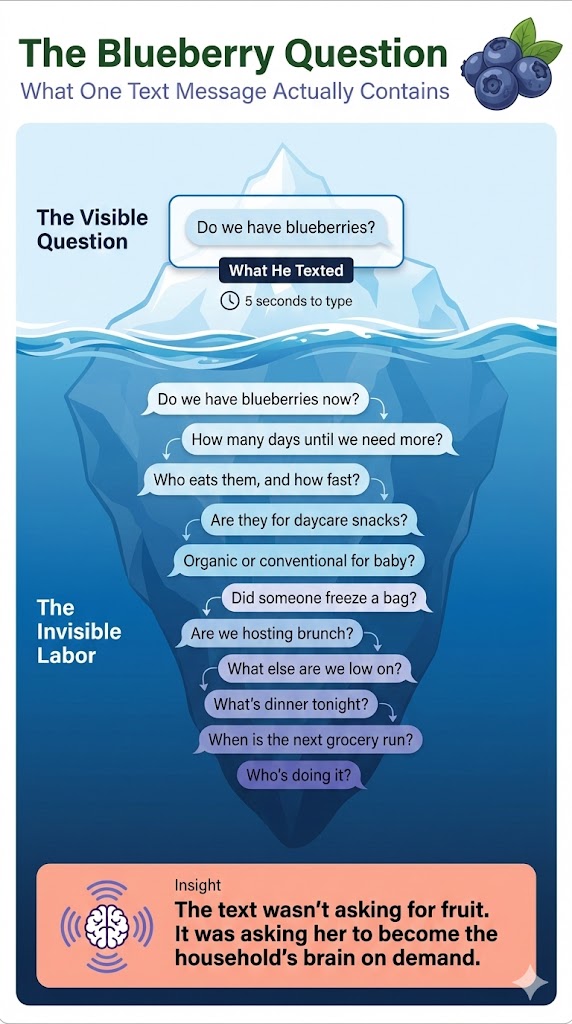
"Do we have blueberries?" looks like a five-second question. Underneath it is exactly the noticing/planning/following-up system this day's own why field describes -- inventory tracking, dietary needs, who's low on what, whose job it is to notice. This is the concrete version of the invisible load your inventory activity is about to make visible category by category.
Full Load Inventory
List every responsibility required to keep your household running -- not just the task but the full cycle: noticing, planning, executing, and following up. Categories: Home Maintenance, Finances, Food, Children, Social, Vehicles, Health, Admin. For each item: who notices when it needs to be done? Who decides when? Who follows up?
Your response here isn't saved yet -- that lands with activity persistence, a later step.
The Great Reveal
Compare lists at the kitchen table. Look for who is noticing and tracking vs. who is executing when asked. Partner carrying more: "When I look at this, I feel [exhausted/alone] because I carry the cognitive load." Partner carrying less: "I see it now. I did not realize you were carrying all of that." Do not defend. Just see it.
Your response here isn't saved yet -- that lands with activity persistence, a later step.
Reflect with your coach
Did your inventory include the invisible parts -- noticing and follow-up -- not just the visible tasks, and did you resist defending yourself when your partner shared theirs?
Day 8 of 28