Long-term marriage satisfaction is predicted less by falling in love and more by choosing to act lovingly when you do not feel it. Commitment is a behavior, not a feeling -- the intensity of this program will fade, and the old pull will return, so the real question today isn't whether you love each other, it's whether you're willing to keep choosing each other on the ordinary days.
Tap to view full size
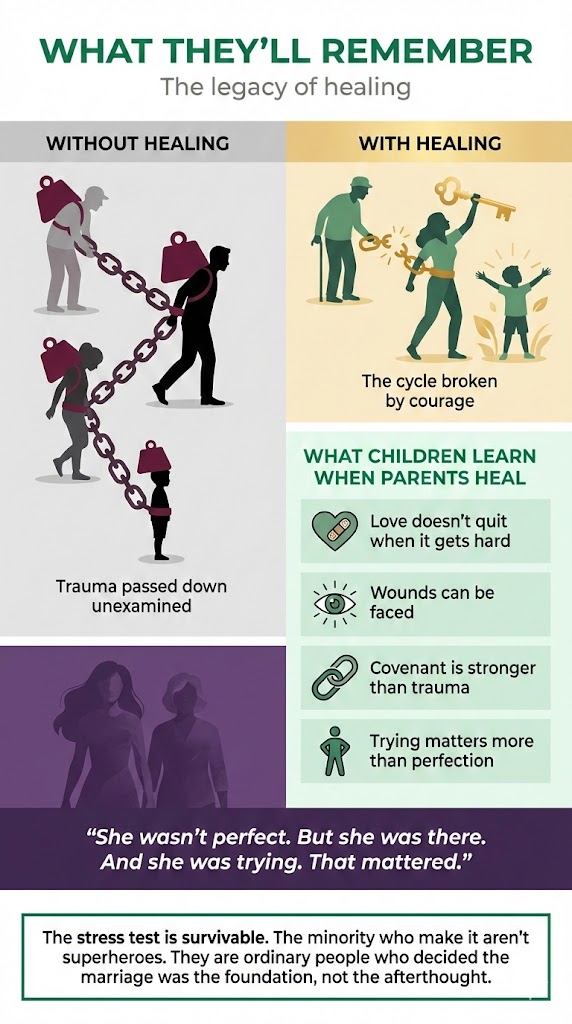
"She wasn't perfect. But she was there. And she was trying. That mattered." That's the actual bar the 50-year commitment sets -- not flawless, just consistently showing up. The stress test is survivable, and the people who make it aren't superheroes; they're ordinary people who decided the marriage was the foundation, not the afterthought.
The 50-Year Commitment
Reflect on the last 28 days. Are you willing to keep doing this work for 50 years? Write one sentence about who you committed to becoming in this marriage.
Your response here isn't saved yet -- that lands with activity persistence, a later step.
Vow Renewal
Imagine your 50th anniversary. Your grandchildren ask what made your marriage work. Write the answer together -- not in general terms, but specifically. Renew your vows in plain language based on what you have actually learned about each other in 28 days: "We acknowledge this work is never finished. We choose a long obedience in the same direction."
Your response here isn't saved yet -- that lands with activity persistence, a later step.
Reflect with your coach
Is your renewed vow specific to what you've actually learned about each other in these 28 days -- or could it be copy-pasted onto any couple's wedding day?
"A long obedience in the same direction" -- faithfulness measured in decades, not moments. This is that commitment named out loud.
Day 26 of 28