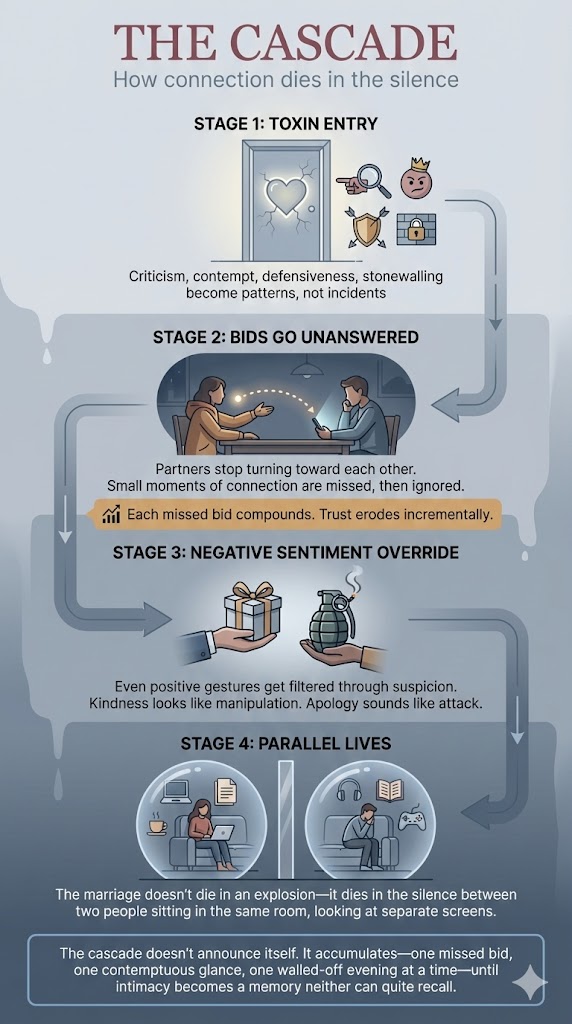
Early warning systems make relapse detectable while it's still a small correction, not a major repair -- the plan converts "we are struggling again" from a source of shame into a trigger for a known protocol. Left unnamed, drift follows a real, well-documented sequence: flooding becomes chronic, then ambiguous behavior starts getting read negatively, then partners quietly stop bidding and sharing, then loneliness. The whole point of naming your own early signs today is catching stage one, not discovering you're in stage four.
Tap to view full size
This is the drift this day's plan is built to interrupt -- the same real mechanisms as this page's own insight, just labeled as four stages. Stage 1 is where your warning-sign inventory is aimed: catch the toxin entry before it compounds into stage 4's parallel lives.
Warning Sign Inventory
Write your personal early warning signs -- the specific behaviors you exhibit when you are pulling away (sarcasm, silence, avoidance, scrolling). Rank them: which comes first, which signals you are further along?
Your response here isn't saved yet -- that lands with activity persistence, a later step.
Code Red Protocols
Share warning signs. Build a combined list. Agree on three Code Red scripts: Tone -- "We have been using sarcasm for 48 hours. That is a contempt signal. Emergency meeting tonight." Silence -- "We have not had a stress conversation in three days. We are drifting. 10-minute check-in right now." Flooding -- "I am getting flooded and want to stonewall. I am taking 20 minutes, then we repair." Post the scripts somewhere you can actually find them.
Your response here isn't saved yet -- that lands with activity persistence, a later step.
Reflect with your coach
Are your three Code Red scripts specific enough to actually use in the moment -- and did you post them somewhere you'll actually see them, not just leave them in this app?
Falling isn't the failure -- staying down is. A relapse plan is how you rise again on purpose, not by accident.
Day 24 of 28